
Continuous Sludge Dewatering Equipment
BP Belt Filter Press
For Sludge Dewatering & Continuous Cake Discharge
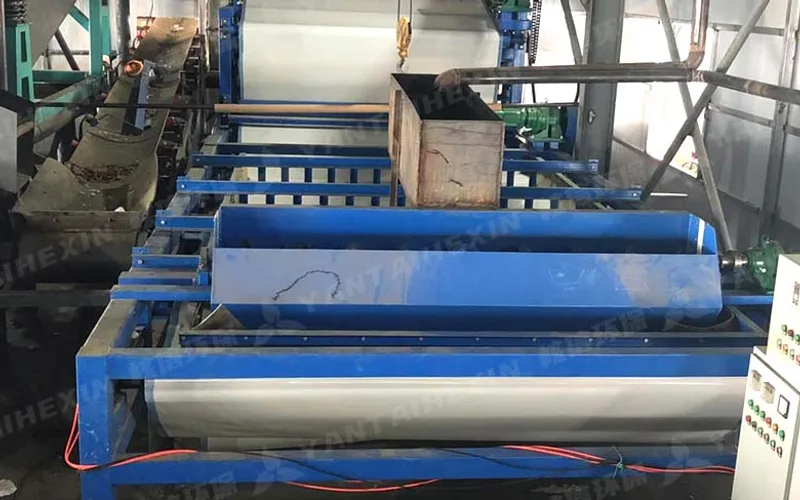
Gravity drainage and progressive roller pressing remove water from conditioned sludge. The twin-belt process supports continuous cake discharge and integrated belt washing.

Continuous
Cake Discharge
Twin Belt
Roller Pressing
Cleaning
Belt Wash System
Control
Tracking and Operation
Key Benefits for Belt Press Dewatering Projects
Assess the press together with sludge conditioning, wash water and discharge handling to support stable operation.
Continuous Processing
A moving-belt process provides a regular cake discharge for downstream handling.
Gravity Drainage
Drain free liquid before the sludge enters the pressure section.
Progressive Pressing
Successive roller stages apply mechanical pressure to the conditioned sludge.
Belt Tracking Control
Review the tracking and tension arrangement for stable belt movement.
Integrated Belt Washing
Clean the belts after discharge to maintain drainage and solids capture.
Accessible Maintenance
Include belt replacement, lubrication and wash-system service in the layout.
Applications in Sludge and Residue Dewatering
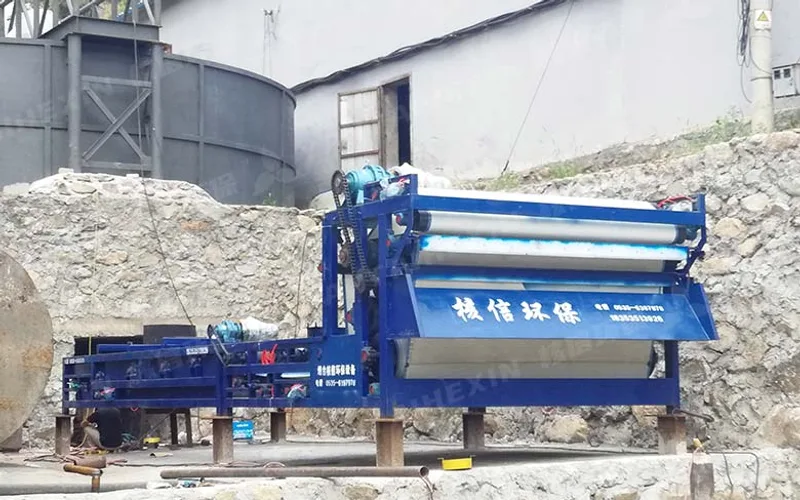
Belt-press suitability depends on how the material drains and responds to conditioning. Review representative sludge before final selection.
Municipal Wastewater Sludge
Review biological and mixed sludge with a suitable conditioning program.
Discuss ApplicationPaper and Textile Sludge
Assess fibrous residues and sludge from paper, dyeing and textile treatment.
Discuss ApplicationIndustrial Wastewater Residues
Review chemical, food-processing and other treatment residues individually.
Discuss ApplicationSelected Mineral Residues
Consider suitable conditioned materials where a continuous belt-press route is appropriate.
Discuss ApplicationWorking Principle
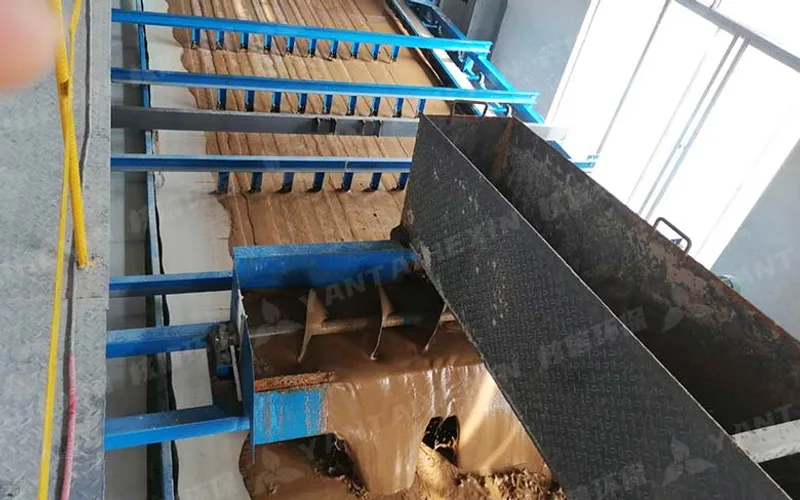
Conditioned sludge first drains by gravity. It then passes through a wedge zone and between two belts over successive rollers. Mechanical pressure releases more liquid, cake is scraped off, and the belts are washed before returning.
Request Technical ProposalContinuous Belt-press Path
Filtrate is collected separately. Belt washing closes the continuous operating loop.
Sludge Conditioning
Mix the sludge with a suitable conditioning agent.
Gravity Drainage
Remove free water before the pressure zone.
Wedge Formation
Prepare the sludge layer for progressive pressing.
Roller Pressing
Press the material between the upper and lower belts.
Cake Discharge
Remove dewatered cake for conveying or collection.
Belt Washing
Clean the returning belts to restore drainage.
Main Structure and Components
The functional groups below work together as a continuous dewatering line. Ancillary conditioning and cake-handling equipment are defined separately in the supply scope.
Conditioning Interface
Connect the prepared sludge and dosing arrangement to the press.
Gravity Drainage Zone
Remove free water before the sludge reaches the pressure stage.
Upper and Lower Belts
Carry and retain the material through successive pressing zones.
Press Rollers
Apply progressive pressure across the moving sludge layer.
Tracking and Tensioning
Keep the belts aligned and correctly tensioned during operation.
Wash and Discharge
Wash the belts and collect the discharged cake and filtrate.
Technical Specifications
Belt width and operating conditions are selected from the solids loading and drainage behavior. Request the model sheet after reviewing the feed.
| Parameter | Selection Basis | Information to Provide |
|---|---|---|
| Press size and belt width | Matched to the required solids duty | Dry-solids mass per hour and operating schedule |
| Feed condition | Assessed for drainage and pressing | Sludge solids content and variability |
| Conditioning | Established through a material trial | Polymer type, dose and mixing conditions |
| Belt and roller settings | Matched to cake formation and discharge | Moisture target and handling method |
| Wash-water system | Sized for belt-cleaning needs | Water availability, quality and pressure |
Cake moisture and capacity depend on sludge properties, conditioning and operating settings. Confirm them with material testing; no universal performance value is implied.
Material and Configuration Options
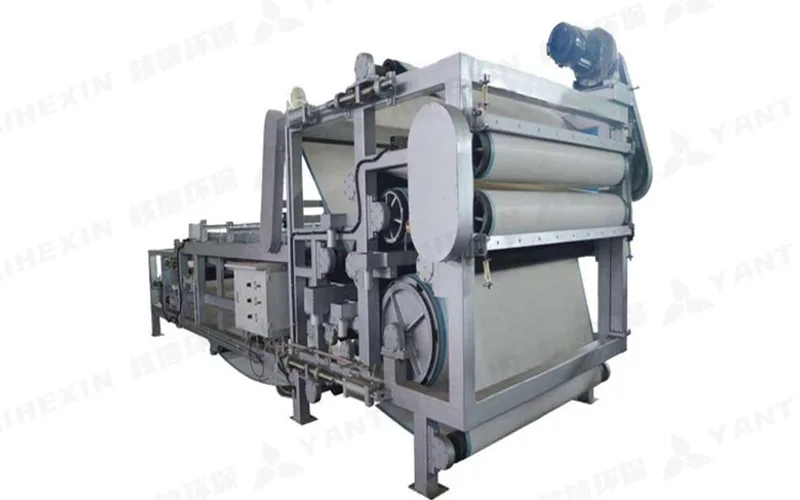
Agree the equipment configuration around the material, operating conditions and project interfaces.
Belt Specification
Choose belt construction and permeability around the sludge and filtration duty.
Conditioning Equipment
Agree the mixer, dosing and sludge feed arrangement in the package.
Wash-water Supply
Review wash-water source, strainers, drainage and service requirements.
Automation and Tracking
Confirm belt tracking, tension control, alarms and plant interfaces.
Why Customers Trust Hexin
Quality Control from Raw Materials to Factory Testing
Continuous belt pressing depends on roller alignment, belt tracking, wash coverage and stable drive operation. These items form the core of the pre-delivery review.
Belt and Roller Alignment
Review roller installation, belt path and tracking operation.
Wash-system Checks
Check spray coverage, collection and accessible wash-system components.
Control and Running Checks
Verify the agreed drive, tracking, alarm and no-load checks.
Technical Confirmation
Confirm sludge characteristics, press size and auxiliary scope.
Component Inspection
Review belts, rollers, bearings, drive and contact materials.
Fabrication and Assembly
Check frame condition and roller alignment before running tests.
Factory Verification
Complete agreed operation and control checks before dispatch.
Project-based Filtration Solutions
The press is one part of the sludge-handling line. Compare the complete preparation, dewatering and discharge route for the project.
Industrial Sludge Dewatering
Review sludge concentration, conditioning, press duty and disposal requirements.
Learn MoreChemical Slurry Treatment
Compare dewatering routes for process residues and wastewater-treatment solids.
Learn MoreTailings Dewatering
Check whether belt pressing suits the tailings before choosing the dewatering equipment.
Learn MoreDelivery, Service and Export Packing
Agree manufacturing, shipment and commissioning responsibilities as part of the technical proposal and supply contract.
Manufacturing Schedule
After technical proposal and supply scope confirmation, Hexin prepares a project-specific production schedule based on equipment size, materials, purchased components, and automation requirements.
Commissioning Support
Support can cover installation review, no-load testing, process checks, equipment adjustment, performance observation, and operator training according to project scope.
Export Packing
Large equipment can be fixed with steel structure packing, while small components and electrical parts can use wooden cases with moisture and rust protection.
Need a Belt Filter Press for Your Sludge?
Send the sludge source, feed solids, dry-solids loading and cake-handling target. Hexin can review the press and auxiliary equipment for your project.
What to Include in Your Inquiry
Sludge Characteristics
Sludge source, feed solids, particle or fiber content, pH and existing conditioning.
Dewatering Duty
Dry-solids loading, operating hours, cake-moisture objective and discharge handling.
Utilities and Layout
Wash water, drainage, power, service space and project country.
Related Products and Solutions
Horizontal Vacuum Filter
Continuous vacuum filtration and cake washing.
Learn MoreDF Ceramic Filter
Ceramic filtration for suitable fine slurry.
Learn MoreTFP Vertical Automatic Pressure Filter
Automatic pressure filtration and cake discharge.
Learn MoreNGZ High Efficiency Thickener
Slurry concentration and overflow recovery.
Learn More