
How to Choose a Horizontal Vacuum Belt Filter for Mining Slurry Dewatering
A practical selection guide covering slurry behavior, solids loading, cake moisture, filter cloth, plant layout and the operating data a supplier needs.
Key Takeaways
- Start with representative slurry data, not a catalogue model.
- Size from dry-solids load and filtration test results.
- Define cake moisture from the next handling step.
- Check cloth cleaning, access and complete plant layout.
At a mine site, a horizontal vacuum belt filter should never be selected from a model name or feed-flow figure alone. Two slurries can look similar and behave very differently on filter cloth: one drains cleanly, another quickly blinds the media, while a third forms a cake that cracks before the drying zone can work effectively.
The useful buying question is therefore practical: can the proposed filter handle this slurry, reach the required moisture range and operate reliably for the planned production hours? The answer comes from material data, test work, layout checks and an understanding of what happens after the cake leaves the belt.
Start with the Slurry, Not the Catalogue
Catalogue capacity is a starting point, not a guarantee. Mining slurry may come from flotation concentrate, tailings, iron ore, gold ore, gypsum or other mineral streams. Solids concentration, particle-size distribution, fine clay, pH, feed temperature and reagent residue can all change filtration behavior.
Coarser slurry commonly gives liquid a clearer path through the cake. Fine or sticky slurry may retain water and reduce filtration rate. Use existing plant test data whenever it is available. Where it is not, a representative laboratory or pilot filtration test is more reliable than sizing equipment from flow rate alone.
What the Filter Does in the Line
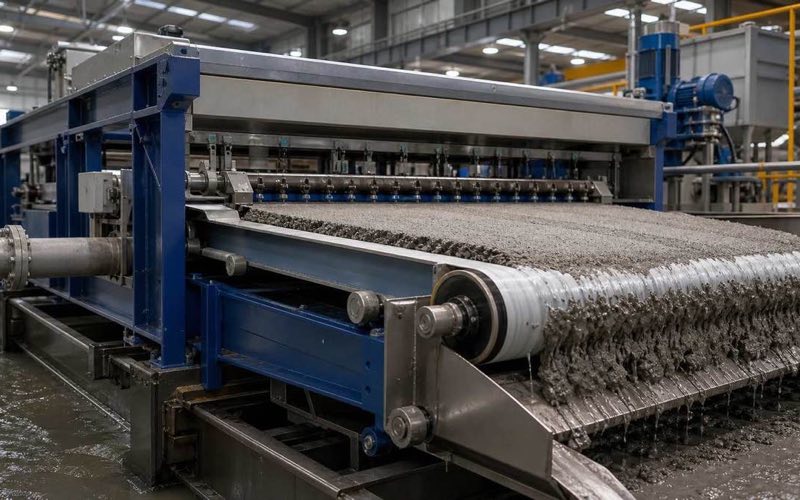
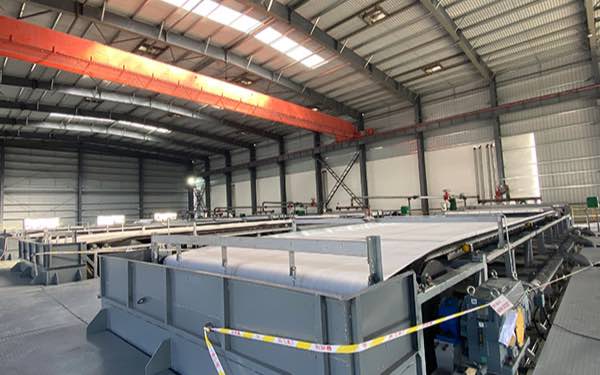
Slurry is distributed onto moving filter cloth. Vacuum draws liquid through the cloth while solids form a cake on the surface. The cake then travels through filtration, optional washing, drying and discharge zones before the cloth is cleaned and returned to service.
When Is a Horizontal Vacuum Filter a Good Fit?
The equipment is worth reviewing when the slurry can form a stable, permeable cake and the plant needs continuous feed and discharge. It is particularly useful where cake washing, staged drying or direct visual access to the process is important.
- The slurry is suitable for vacuum filtration.
- The plant requires continuous operation.
- Belt speed and cake thickness need adjustment.
- Cake washing is part of the process.
- Operators need visible process control.
- Maintenance access must remain open.
Do Not Size the Filter from Flow Rate Alone
A feed value such as 80 m3/h can hide the real solids load. A light slurry and a dense abrasive slurry may have the same volumetric flow but require very different filtration areas, vacuum demand, cake thickness and belt speed.
Ask for dry-solids throughput per hour and connect it with the target cake-moisture range. A drier cake can require more residence time or a larger active filtration area. Pushing too much material across too little belt area often results in wet cake, unstable discharge or higher downstream handling costs.
Treat Cake Moisture as a Handling Requirement
Low cake moisture is valuable only when it supports the next process step. Consider whether the cake will be conveyed, loaded, stacked, thermally dried or returned to another operation. The right target is normally a workable moisture range that meets handling and process needs without unnecessary equipment area or energy demand.
Check the Belt, Cloth and Washing System
Mining slurry can be demanding on wearing components. Cloth blinding, poor belt tracking, weak wash sprays and difficult scraper access can turn otherwise suitable equipment into a maintenance burden. Review these systems with the same care as the main frame and filtration area.
| Item | Question to Ask | Why It Matters |
|---|---|---|
| Filter cloth | Which cloth has worked with comparable slurry? | Controls drainage and cleaning frequency. |
| Belt tracking | How is tracking adjusted during long shifts? | Reduces belt wear and edge damage. |
| Vacuum box | Can seals and filtrate paths be inspected easily? | Supports stable vacuum performance. |
| Washing system | Are spray nozzles accessible and correctly sized? | Helps prevent cloth blinding. |
| Cake discharge | Does the tested cake release cleanly? | Limits carryback and manual cleanup. |
Plant Layout Can Decide Whether the Selection Works
A belt filter requires more than floor space for the main frame. The plant must also accommodate slurry distribution, filtrate receivers, vacuum pumps, wash-water lines, discharge conveyors, access platforms and the route used to replace filter cloth or wearing parts.
Before ordering, map the slurry path, filtrate path and cake-discharge path. Mark operator positions, drainage points and maintenance clearances. These basic checks prevent expensive field modifications and make routine service safer and faster.
Data to Prepare Before an Inquiry
Providing the following information allows a supplier to move from a general model recommendation to a project-specific review.
- Slurry source and mineral type
- Solids concentration
- Particle-size distribution
- Hourly flow and dry-solids load
- Target cake-moisture range
- Need for cake washing
- Available installation space
- Operating hours and utilities
Frequently Asked Questions
Is a horizontal vacuum belt filter suitable for every slurry?
No. It performs best when the material forms a reasonably permeable cake. Very fine, clay-rich or sticky slurry should be tested before equipment selection.
What information should be sent to the supplier?
Send solids concentration, particle-size distribution, flow rate, dry-solids load, pH and temperature where relevant, target cake moisture, washing requirements and available layout space.
Why is slurry testing important?
Testing helps confirm filtration rate, cloth-blinding risk, cake release, wash performance and the realistic moisture range for the actual material.
Share This Guide
Related News
View All News →
Need Help Selecting Filtration Equipment?
Send us your material type, capacity, target cake moisture and project country. Hexin engineers can help review the filtration method and equipment configuration.