
How to Size a High-Efficiency Thickener for Mining Tailings
A buyer-focused guide to settling tests, feed solids loading, overflow clarity and the underflow target needed for tailings thickening.
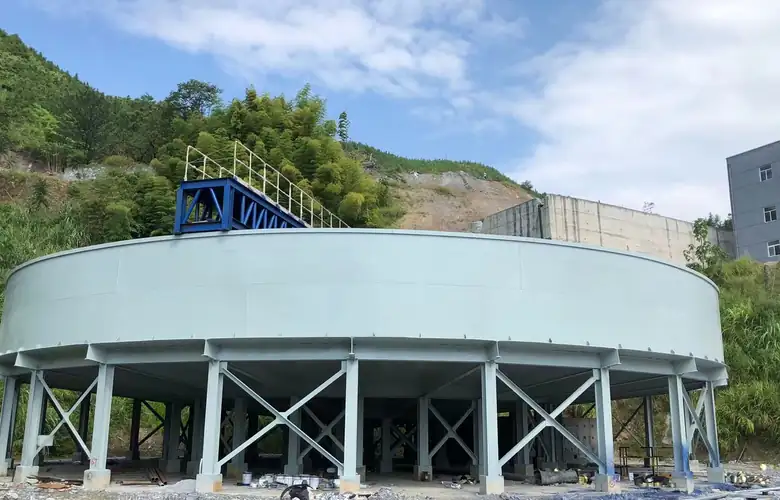
Key Takeaways
- Use representative settling tests; tank diameter is not a starting specification.
- Report both slurry flow and dry-solids throughput, including normal and peak feed.
- Set the underflow target around downstream pumping or filtration needs.
- Review overflow clarity, flocculant response and rake loading together.
Two tailings streams with the same hourly flow can require very different thickener designs. Particle size, solids concentration and settling behavior change how much area, residence time and feed conditioning the process needs. Selecting by tank diameter alone risks poor clarification, unstable underflow or a rake system working beyond its intended range.
A sound sizing discussion starts with the material and the downstream process. This guide explains which tests and project data help turn a general equipment inquiry into a more reliable engineering review.
Define the Feed Envelope
Record the expected slurry flow, feed solids concentration, slurry density and dry-solids mass per hour. Both hydraulic load and solids load matter. A concentrated feed may carry far more solids than a dilute feed at the same volumetric rate.
Do not submit a single average number if the plant regularly changes ore, water balance or production rate. Normal conditions, expected peaks and the duration of those peaks help engineers assess capacity and control range. Where several streams combine, provide the blend and the main variations.
Think in a Process Chain
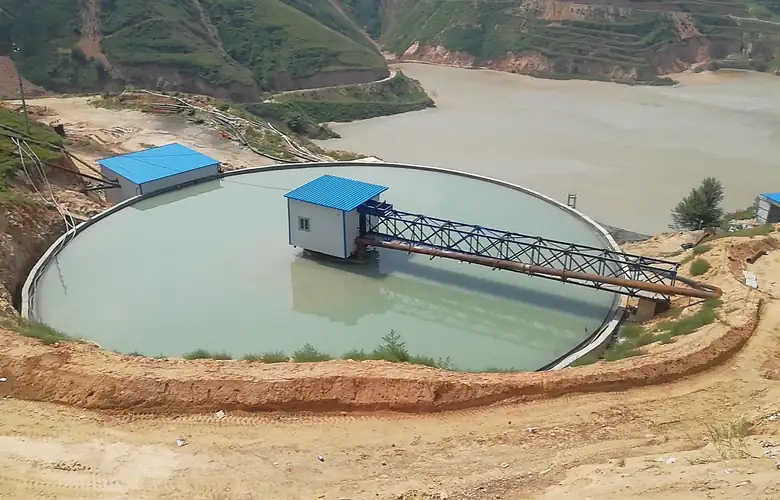
The thickener does not operate in isolation. Its overflow returns water to the plant, while its underflow must suit the pump, filter, tailings line or discharge method that follows.
Run Representative Settling and Flocculant Tests
Observe how the solids-liquid interface moves over time and how clear the supernatant becomes. Record the initial feed concentration, settling rate, settled-bed volume and compression behavior. Compare more than one representative sample if ore characteristics change across the project.
Flocculant type and dosage can alter both settling and overflow clarity. The fastest visible settling is not automatically the best operating point: large, fragile flocs may behave differently under feed-well mixing, and a dense bed may be difficult to pump. Test conditions should reflect the intended process water and feed chemistry where practical.
Choose a Practical Underflow Target
A high underflow solids concentration may improve water recovery, but the highest achievable number is not always the most useful. The material still has to leave the tank reliably. Confirm whether the underflow feeds a filter, goes to a tailings line or enters another process. Each route has different viscosity, pumpability and moisture requirements.
Check Feed Conditioning, Bed Load and Rake Protection
The feed system should distribute slurry and provide effective contact with flocculant before material enters the settling zone. Poor mixing can reduce performance even when the tank area appears sufficient. Discuss fine particles, entrained air and any rapid feed changes with the equipment supplier.
As the settled bed becomes denser, rake resistance can rise. Review the proposed drive, torque monitoring, automatic rake lifting and alarm logic for the actual duty. Ask how operators will recognize an overloaded bed and recover normal operation without losing overflow quality.
| Project input | Why it matters | Useful evidence |
|---|---|---|
| Feed flow and solids loading | Defines hydraulic and mass load | Normal and peak operating data |
| Settling behavior | Guides area and residence-time review | Representative test curves |
| Flocculant response | Supports feed conditioning design | Dosage and clarity observations |
| Underflow target | Connects thickener to downstream equipment | Pumpability and filtration needs |
| Overflow requirement | Sets water-recovery quality target | Plant reuse or discharge standard |
Data to Prepare Before a Thickener Inquiry
Providing a concise process sheet saves time and makes equipment recommendations more specific:
- Material type and source
- Normal and peak slurry flow
- Feed solids concentration and dry-solids throughput
- Particle-size distribution and solids density
- Settling and flocculant test results, if available
- Desired overflow clarity and water-reuse plan
- Required underflow range and downstream equipment
- Site layout, utilities and control requirements
Frequently Asked Questions
Can a thickener be selected from slurry flow alone?
No. Flow does not describe dry-solids load, settling response or the underflow duty. Those inputs should be assessed together.
Is the densest possible underflow always best?
No. Higher density may make pumping or downstream handling harder. The suitable range depends on the next process step and stable operation.
What if settling-test data are not available?
Share representative feed information and discuss sample testing before final sizing. A quotation made without material-specific evidence should be treated as preliminary.
Share This Guide
Related News
View All News →
Planning a Tailings Thickening Project?
Share your material type, capacity, operating conditions and project country. Hexin can review suitable equipment and process options for your application.