
Mining Thickener vs Filter: Roles in Tailings Dewatering
Understand how thickening and filtration work together, what each stage delivers and which data to prepare for a tailings dewatering project.
Key Takeaways
- A thickener concentrates slurry and separates an overflow water stream.
- A filter uses a porous medium to separate liquid and form a cake.
- Review thickening, filtration and cake handling as connected duties.
- The required process depends on representative material tests and the final handling route.
A mining thickener and a filter both remove liquid from solids, but they serve different roles in a tailings dewatering line. A thickener normally delivers concentrated slurry or paste. A filter separates more liquid through a filtration medium and produces cake. One machine should not be selected as a direct substitute for the other simply because both are described as dewatering equipment.
For a project review, start with the required output and work back through the process. Hexin’s NGZ high-efficiency thickener and filtration equipment can be evaluated as separate units or as parts of a coordinated route. The appropriate arrangement depends on the tailings and plant requirements.
1. What Does a Mining Thickener Do?
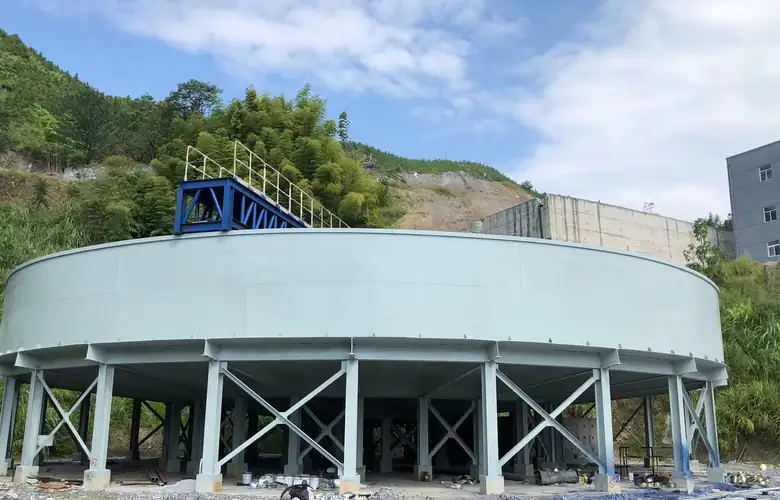
A thickener provides a settling and concentration stage. Solids settle toward the bottom, the rake system assists collection, and concentrated material leaves as underflow. The overflow is a separate liquid stream whose clarity must be assessed against its intended use.
Useful inputs include feed flow, solids loading, settling behavior, flocculant response and the required underflow range. Tank diameter alone does not define a suitable machine. The existing mining thickener sizing guide covers the feed data and testing needed before equipment sizing.
2. What Does the Filter Add?
A filter retains solids on a filtration medium while a pressure difference drives liquid through it. Its output should be evaluated as a cake with defined handling and moisture requirements, alongside a filtrate stream with an agreed destination.
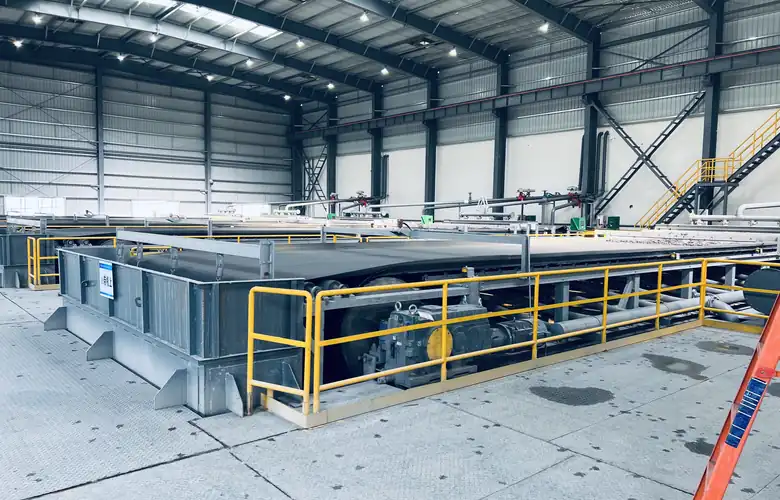
The route may involve a horizontal vacuum belt filter or an automatic pressure filter, depending on representative tests. Continuous operation, cycle timing, cake release and any washing duty must fit the application. A filter type that suits one mineral stream should not be assumed to suit all tailings.
| Question | Mining thickener | Filter |
|---|---|---|
| How is separation achieved? | Settling, clarification and concentration | Liquid passes through a medium under a pressure difference |
| What is the solids output? | Concentrated underflow slurry or paste | Filter cake, subject to the tested material response |
| Which tests matter? | Settling, flocculation, compression and underflow behavior | Filtration rate, cake moisture, release and any wash requirement |
| Which interface matters next? | Underflow pumping, storage or filter feeding | Discharge, conveying and the selected cake-handling route |
| What must be specified for water? | Overflow clarity and destination | Filtrate quality, collection and destination |
3. Why Are Thickening and Filtration Often Reviewed Together?
Where a project requires filtered tailings, upstream concentration and downstream filtration need a shared design basis. The underflow leaving the thickener becomes part of the filter’s feed duty. Its normal range and expected variation should therefore be included in filtration testing and equipment selection.
The highest possible underflow density is not automatically the most useful target. The material must still move through the proposed pumps and feed arrangement. Evaluate concentration together with flow behavior, solids loading and the downstream filter duty.
Match the Feed to the Filter
Compare feed conditions and operating schedules across the line. Review the vacuum belt filter vs pressure filter guide after the required cake and feed conditions are defined.
4. Review Water Recovery and Cake Handling Separately
Water separated in the thickener and water collected as filtrate may serve different destinations. Record the intended reuse, any process-chemistry constraints and the storage or collection arrangement. A water-recovery percentage alone does not establish that either stream is ready for its intended use.
Likewise, the cake should be assessed for the planned receiving equipment and final placement route. Filtered tailings are not water-free solids. Confirm discharge, conveying and placement requirements as part of the project review rather than selecting a filter from a moisture target alone.
Data to Share for a Tailings Dewatering Review
- Tailings source, mineral composition and representative samples
- Normal and peak slurry flow, feed solids and dry-solids throughput
- Particle-size distribution and changes expected during operation
- Settling tests, flocculant observations and proposed underflow range
- Filtration tests, cake-release observations and handling requirements
- Overflow and filtrate destinations, with their required quality
- Operating hours, available layout, utilities and supply scope
Frequently Asked Questions
Can a mining thickener replace a filter?
Not where the agreed output requires filter cake. A thickener normally provides concentrated underflow; a filter provides a different separation stage. Confirm whether the project needs slurry, paste or cake before specifying equipment.
Does every tailings project need both machines?
No. Select the route from the material, water balance and required handling outcome. The process map above is an arrangement to evaluate, not a standard package for every site.
Should a thickener and filter be quoted from the same flow figure?
Use a shared mass and water balance, with the expected conditions at each stage. The slurry leaving a thickener can have a different concentration and volumetric flow from the original feed. Provide dry-solids loading and stage-specific feed data.
Review Your Tailings Dewatering Route
Share your feed data, test results and handling requirements to discuss suitable thickening and filtration equipment.