
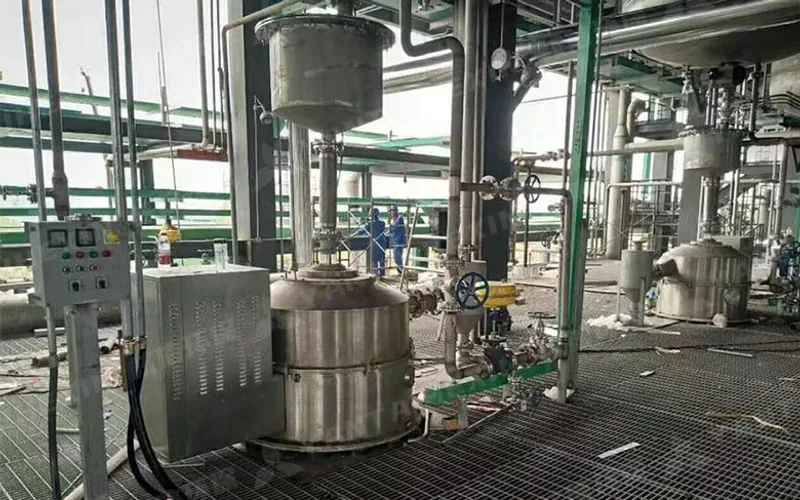
Automatic Centrifugal Separation Equipment
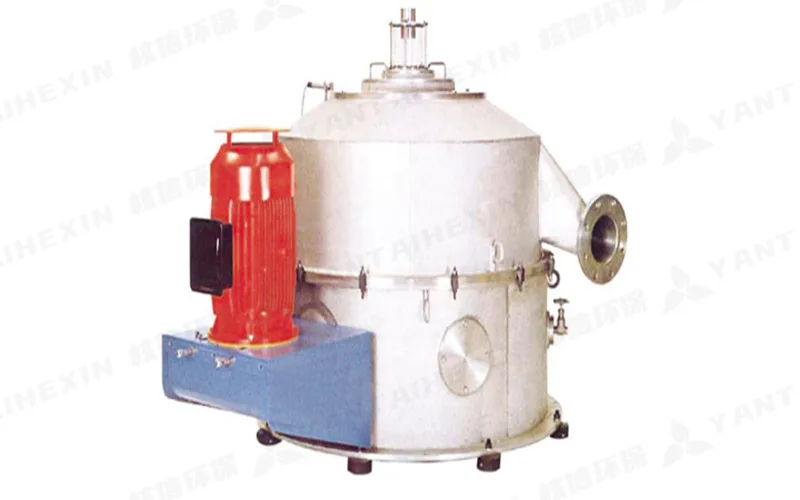
HXLX Fully Automatic Discharging Centrifuge
For Particle Dewatering & Automatic Discharge
Centrifugal filtration separates liquid from suitable particulate solids. Feed distribution and residence-time adjustment are reviewed around the material and required moisture target.

Centrifugal
Separation Force
Automatic
Solids Discharge
Adjustable
Material Residence
Selected
Filtration Medium
Key Benefits for Centrifugal Filtration Projects
Assess this technology around the actual material. Feed stability, media choice and discharge handling determine the practical operating arrangement.
Centrifugal Filtration
Use rotation to drive liquid separation through the selected filtration medium.
Automatic Solids Discharge
Support a defined discharge route without manual cake removal as the normal process step.
Feed Distribution
Review the diversion arrangement to spread feed through the rotating separation zone.
Residence-time Review
Adjust the material-diversion arrangement for the required separation duty.
Material Adaptation
Select the medium and contact-part requirements around corrosion, wear and particle behavior.
Process Integration
Coordinate feeding, liquid collection and solids handling as one operating line.
Applications in Particulate Solids Dewatering
Review free-draining or otherwise suitable particles individually. This centrifugal filter should not be assumed suitable for every fine or sticky sludge.
Inorganic Salts and Chemicals
Assess crystalline or granular feed and the retained-liquid requirement.
Discuss ApplicationMineral Processing Materials
Review particle size, abrasiveness and practical separation behavior.
Discuss ApplicationFood and Fermentation Solids
Consider suitable particulate materials after confirming contact and cleaning requirements.
Discuss ApplicationSelected Industrial Residues
Review each residue with a sample rather than assuming universal sludge suitability.
Discuss ApplicationWorking Principle
The feed enters a rotating conical-drum filtration zone. Centrifugal force moves liquid through the selected medium while solids remain in the separation zone and move toward discharge. Material-diversion settings influence residence and dewatering.
Request Technical ProposalCentrifugal Separation Path
Conceptual process sequence. The mechanical arrangement and operating limits are defined by the selected model.
Material Assessment
Review particle size, liquid content and drainage behavior.
Controlled Feeding
Supply the material at an appropriate and stable rate.
Feed Distribution
Spread feed through the rotating separation zone.
Centrifugal Filtration
Separate liquid through the selected medium.
Solids Discharge
Release retained solids through the agreed discharge arrangement.
Operation Review
Observe loading, discharge condition and safe operating limits.
Main Structure and Components
These functional groups help define the centrifuge package. Mechanical dimensions, speed and protection settings require the selected model specification.
Conical Drum Assembly
Provides the rotating filtration zone for the selected duty.
Filtration Medium
Retains particles while allowing separated liquid to pass.
Feed and Diversion
Distributes material through the separation zone.
Solids Discharge
Directs the dewatered material to downstream collection.
Liquid Collection
Collects separated liquid for recovery or further treatment.
Drive and Protection
Supports rotation with the agreed drive, guarding and monitoring scope.
Technical Specifications
Confirm a centrifuge specification from the material and operating duty. Review the selection points below to define a suitable equipment configuration.
| Parameter | Selection Basis | Information to Provide |
|---|---|---|
| Feed and particle size | Matched to centrifugal filtration suitability | Particle-size distribution and fines content |
| Capacity | Selected from the material loading and separation behavior | Wet feed and dry-solids loading |
| Solids condition | Reviewed through representative testing | Moisture target and particle-handling limits |
| Filtration medium | Matched to retention, drainage and wear | Particle shape, abrasion and liquid properties |
| Drum, drive and contact parts | Confirmed for the selected model | Speed limits, materials, power and protection requirements |
Operating speed, dimensions, motor power and capacity are model-specific. Request the selected model sheet and verify the material before confirming a performance commitment.
Material and Configuration Options
Agree the equipment configuration around the material, operating conditions and project interfaces.
Filtration Medium
Review retention and drainage with the actual particle distribution.
Contact-part Materials
Agree compatibility and wear requirements with the feed chemistry.
Diversion Arrangement
Review material movement and residence for the separation duty.
Drive and Protection
Confirm operating controls, monitoring, guarding and site requirements.
Why Customers Trust Hexin
Quality Control from Raw Materials to Factory Testing
A rotating separator needs careful assembly and an agreed verification plan. Review the rotating parts, drive installation, protection and discharge arrangement before dispatch.
Rotating Assembly Review
Confirm the applicable inspection and balance requirements for the selected model.
Drive and Protection Checks
Review guarding, drive installation and the agreed monitoring functions.
Discharge and Running Checks
Confirm no-load verification and any agreed material trial scope.
Technical Confirmation
Agree material duty, equipment scope and performance acceptance method.
Component Inspection
Review drum, medium, drive parts and material-contact requirements.
Assembly Checks
Inspect installation, connections and the specified protection arrangement.
Factory Verification
Complete agreed checks and provide the applicable operating instructions.
Project-based Filtration Solutions
Choose the centrifuge as part of a complete separation route. Compare material testing, upstream feed preparation and downstream solids handling.
Chemical Slurry Filtration
Review particle recovery, liquid separation and material compatibility.
Learn MoreFertilizer Process Separation
Discuss suitable granular or crystalline process materials and their handling requirements.
Learn MoreProject-specific Separation
Compare centrifugal filtration with other equipment for the actual feed.
Learn More
Delivery, Service and Export Packing
Agree manufacturing, shipment and commissioning responsibilities as part of the technical proposal and supply contract.
Manufacturing Schedule
After technical proposal and supply scope confirmation, Hexin prepares a project-specific production schedule based on equipment size, materials, purchased components, and automation requirements.
Commissioning Support
Support can cover installation review, no-load testing, process checks, equipment adjustment, performance observation, and operator training according to project scope.
Export Packing
Large equipment can be fixed with steel structure packing, while small components and electrical parts can use wooden cases with moisture and rust protection.
Need an Automatic Discharging Centrifuge?
Share the material, particle distribution, feed loading and solids-moisture objective. Hexin can assess the centrifuge duty and the appropriate configuration.
What to Include in Your Inquiry
Material and Liquid
Material name, particle distribution, solids content, temperature and liquid chemistry.
Separation Target
Feed rate, retained-liquid target, particle sensitivity and discharge handling.
Operating Environment
Power supply, protection requirements, cleaning needs and project country.
Related Products and Solutions
Horizontal Vacuum Filter
Continuous vacuum filtration and cake washing.
Learn MoreDF Ceramic Filter
Ceramic filtration for suitable fine slurry.
Learn MoreTFP Vertical Automatic Pressure Filter
Automatic pressure filtration and cake discharge.
Learn MoreNGZ High Efficiency Thickener
Slurry concentration and overflow recovery.
Learn More