
Vertical Pressure Filter Pilot Test: What to Measure Before Sizing
Use this checklist to compare complete filtration cycles and give suppliers the data they need to size a vertical pressure filter.
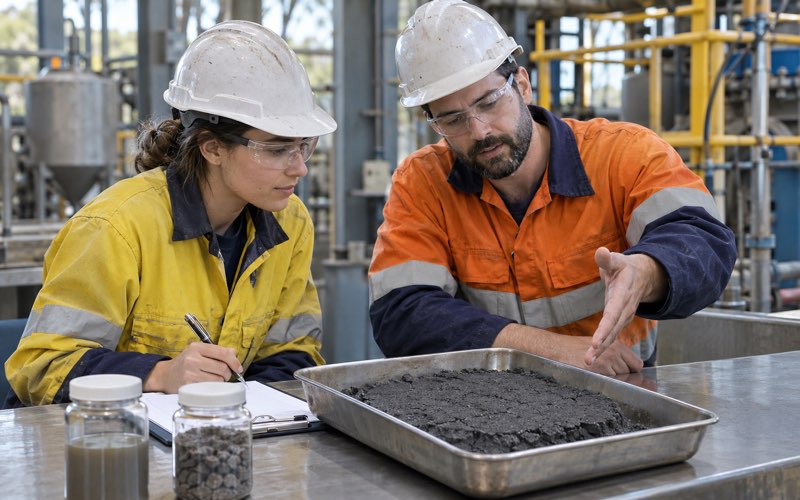
A vertical pressure filter pilot test should establish how much dry material a full cycle can handle while meeting cake moisture, filtrate quality and discharge requirements. Ask for the results by cycle and feed condition so that a supplier can explain the assumptions behind the proposed filtration area.
Define the trial before sending samples
Record which process stream the sample came from, when it was taken, and how it was stored. Include feed solids by weight, particle size distribution, temperature and normal and peak dry solids feed rates. If the plant sees changes in ore blend or more fines during some operating periods, include samples that represent those conditions. Ask the testing team how much sample it needs and how to preserve each sample.
Agree on the cake moisture measurement method and report whether the result is on a wet or dry basis. Define what the filtrate will be used for and which quality indicator matters. If the process needs cake washing, specify the substance to be removed and how the remaining amount will be measured.
Compare the whole cycle
A TFP vertical automatic pressure filter can combine slurry feeding, filtration, diaphragm pressing, optional cake washing, air drying and automatic discharge. Ask the testing team to report which stages were used and how long each took. Include opening, discharge and other non-filtration time in the cycle used for sizing.
| Record | Why it matters |
|---|---|
| Feed solids concentration and dry solids collected per cycle | Shows how much material the test treated under each feed condition. |
| Active test filtration area and full cycle time | Allows comparison of dry solids per square metre per hour. |
| Cake moisture, thickness and release observations | Shows how the cake performed against handling and discharge requirements. |
| Filtrate volume and quality | Helps evaluate the planned water return or downstream treatment. |
| Wash water volume, wash time and residual impurity | Shows whether the wash stage meets its target and what it adds to the cycle. |
| Air use, cloth condition and repeat-cycle behavior | Helps the plant plan utilities and investigate changes between cycles. |
Ask for the assumptions behind the proposed area
Request repeat runs with representative feeds using the same acceptance criteria. For an initial comparison, divide the dry solids collected in each cycle by the active filter area and the full cycle time in hours. The result is a pilot rate in kilograms of dry solids per square metre per hour. Ask the supplier how it translates that rate into proposed installed area, allowing for feed variation, operating hours, cleaning and downtime.
Review the result with the plant team. Check where the discharged cake will land, how the filtrate and wash streams are collected, and what utilities are available. If the trial is part of a broader equipment comparison, see Hexin’s mineral concentrate filtration overview.
What to send for an equipment review
Send the sample description, normal and peak dry solids throughput, cake moisture target, filtrate and wash requirements, full cycle results, and any discharge or layout constraints. Share your trial data with Hexin to discuss the equipment configuration and any follow-up tests.
Plan Your Pressure Filtration Test
Share your slurry properties, capacity and target cake moisture to discuss test work and equipment selection.